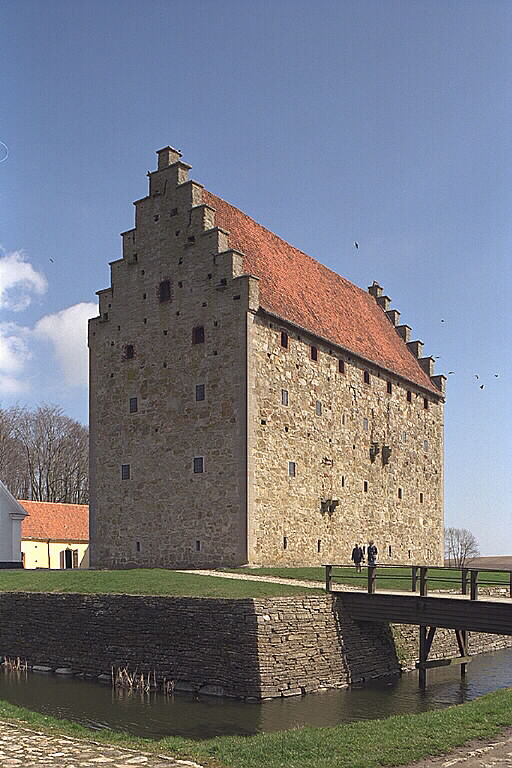
Which castles in Skåne can you visit?
Castles in Skåne: the full list, and the three we'd drive for
Bengt A. Lundberg · CC BY 2.5 · Wikimedia Commons
Short answer
Skåne has roughly 200–250 castles, strongholds and manor houses, depending on how you count — a legacy of the Danish era before 1658 and of rich farmland estates. Most are private homes, but around 25 welcome visitors in some form: a museum, a park, a café, art or a table for dinner. Our three favourites are Glimmingehus, the medieval stronghold on Österlen; Sofiero, the royal summer palace in Helsingborg with its rhododendron ravines; and Malmöhus, the Nordic region's oldest surviving Renaissance castle, in the middle of Malmö.
Editorial answer: our opinion, based on the sources listed below. No venue has paid to appear.
Why Skåne has so many castles
Until the Treaty of Roskilde in 1658, Skåne was part of Denmark. The Danish crown built royal fortresses to hold the land, and noble families built strongholds of their own on the estates they farmed. After the Reformation, church and monastery land passed to the crown and the nobility, and by the 1500s and 1600s Skåne had become the most estate-dense region in the Danish kingdom (Länsstyrelsen Skåne).
That is why castles here sit in open farmland rather than on hilltops. The soil paid for them. Count them and you get different answers: landscape historian Kjell Lundquist estimates roughly 200–250 castles, strongholds and manors depending on the criteria; Kristianstad municipality says 250; Visit Skåne says more than 150. All three are honest — they just count different things.
Three eras in stone
Skåne's castles fall roughly into three layers. The oldest are medieval defensive houses and royal keeps, like Kärnan in Helsingborg and Glimmingehus. Then come the Renaissance castles of the 1500s and 1600s, with moats, towers and brick gables — Malmöhus, Torup, Svaneholm and Vittskövle. Finally there are the 1700s country palaces and the 1800s rebuilds, when many older houses got new towers and romantic silhouettes. Trolleholm's fairy-tale outline, for example, is largely the work of architect Ferdinand Meldahl in the 1800s.
Knowing this helps on a visit: a castle that looks medieval may be Victorian, and a plain yellow house can hide much older walls.
Moats, towers and battlements: Skåne's most picturesque castles
If you are after the storybook look — water all around, round towers, stepped gables and copper spires turned green — these are the castles to point your camera at. Several of them stand in water to this day, a reminder that the moat was once the first line of defence. Torup rises straight out of its moat in the beech woods south of Malmö, and Vittskövle and Marsvinsholm double themselves in the still water when the wind drops.
Häckeberga, by Genarp, sits on its own island in the lake and the nature reserve of the same name, and is the easiest of them to enjoy from the inside, since it is run as a hotel and restaurant. Trolleholm owes its fairy-tale towers to a 19th-century remodelling, while Skarhult and Vrams Gunnarstorp show the Renaissance style with brick gables and towers. Many of these are private homes, so admire them from the road or the paths that are open, and read the lists below to see which ones welcome visitors.
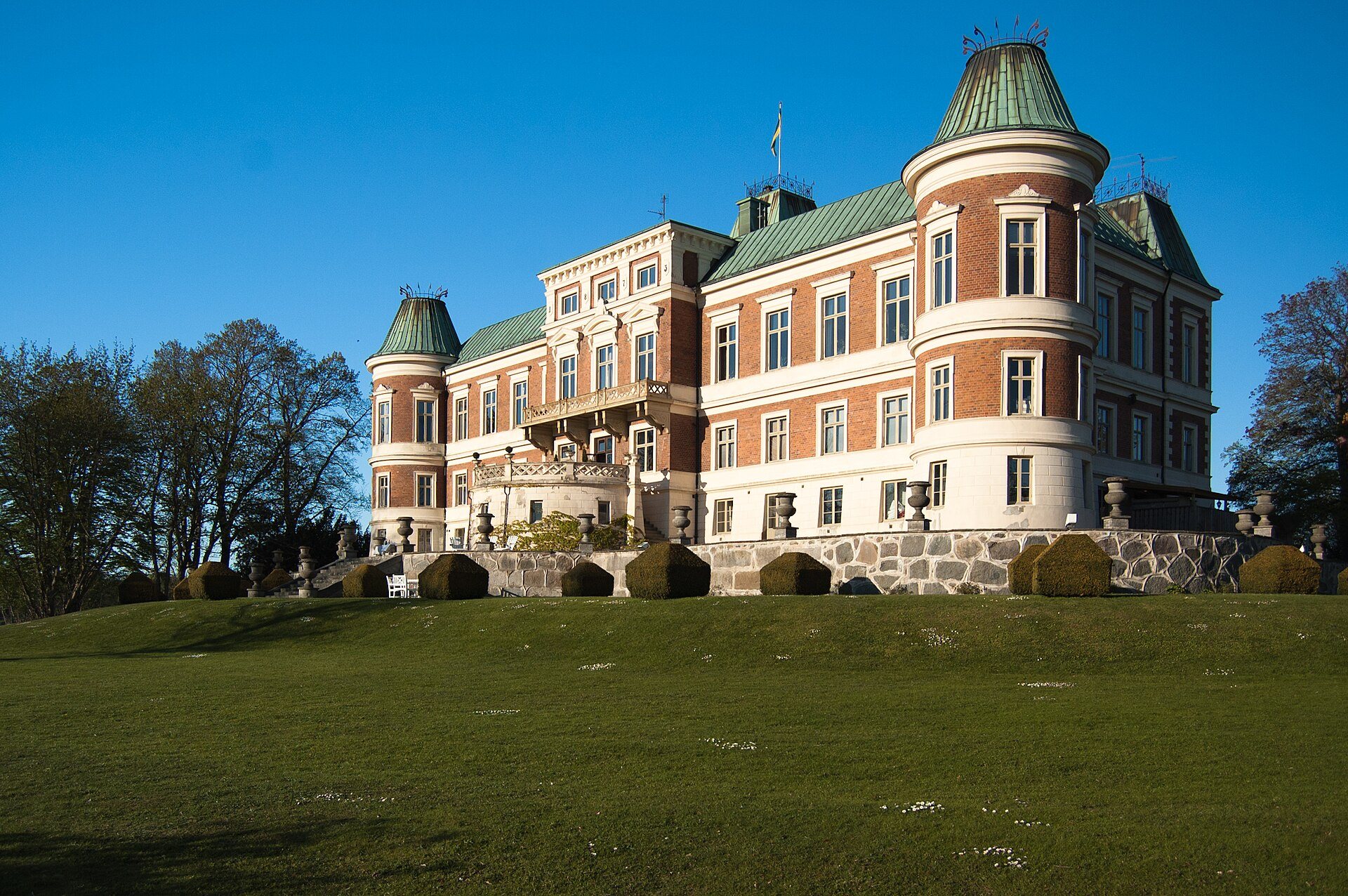
Häckeberga slott near Genarp, with green copper roofs and round corner towers above the lawnFrancois Polito · CC BY-SA 3.0 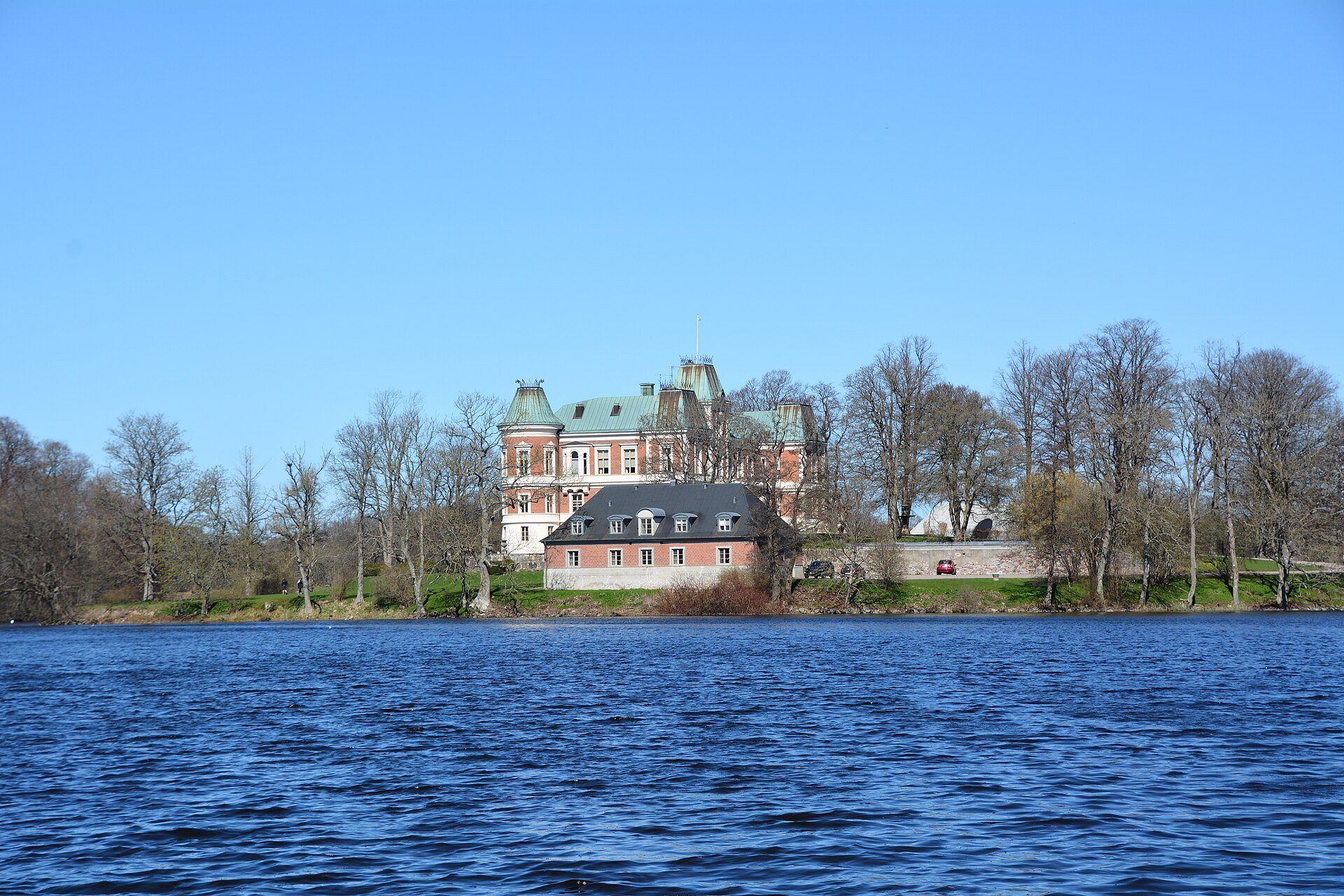
Häckeberga slott on its island, seen across the lake from the south-eastBengt Oberger · CC BY-SA 4.0
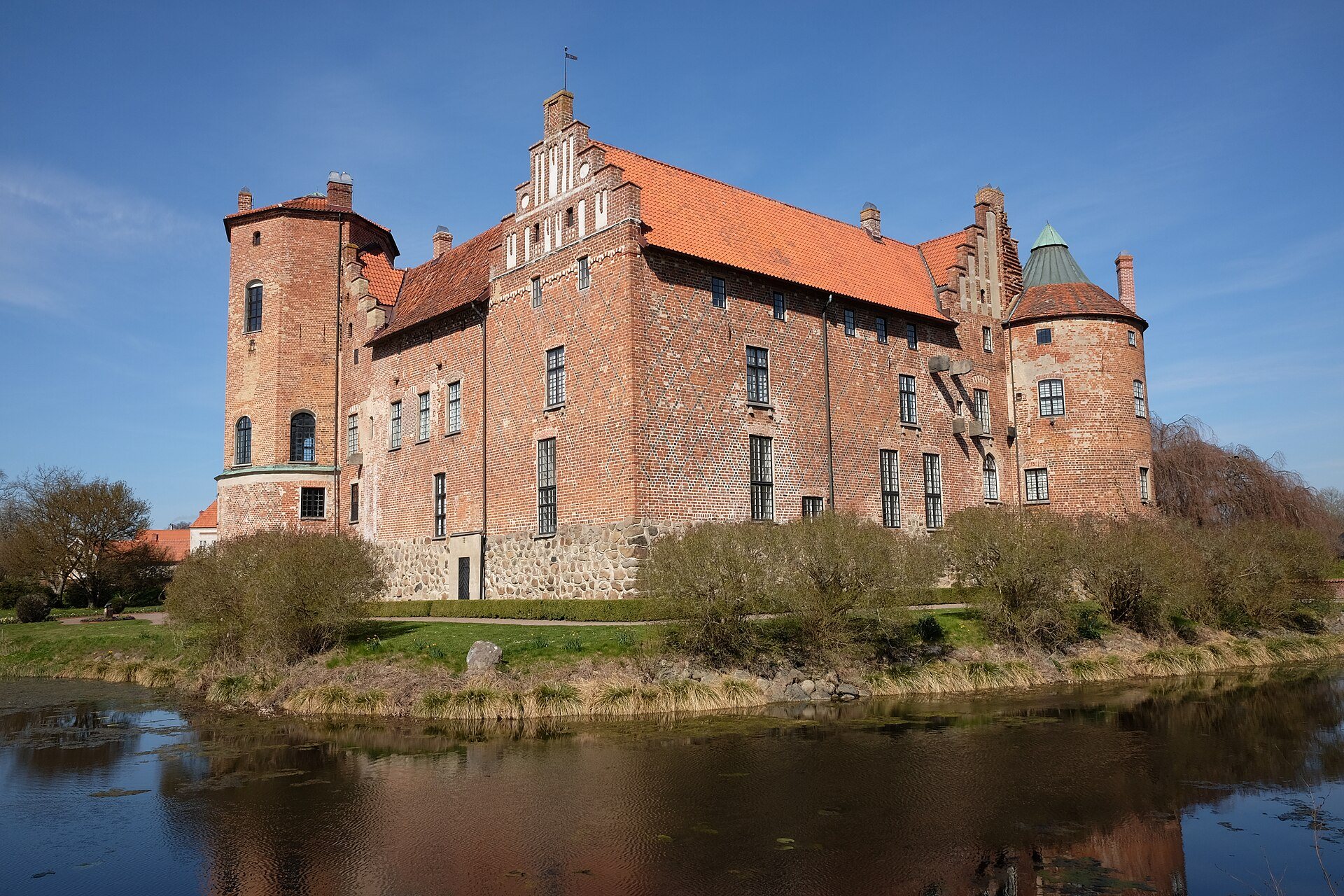
Torups slott rising straight out of its moat in springJohan Jönsson (Julle) · CC BY-SA 4.0 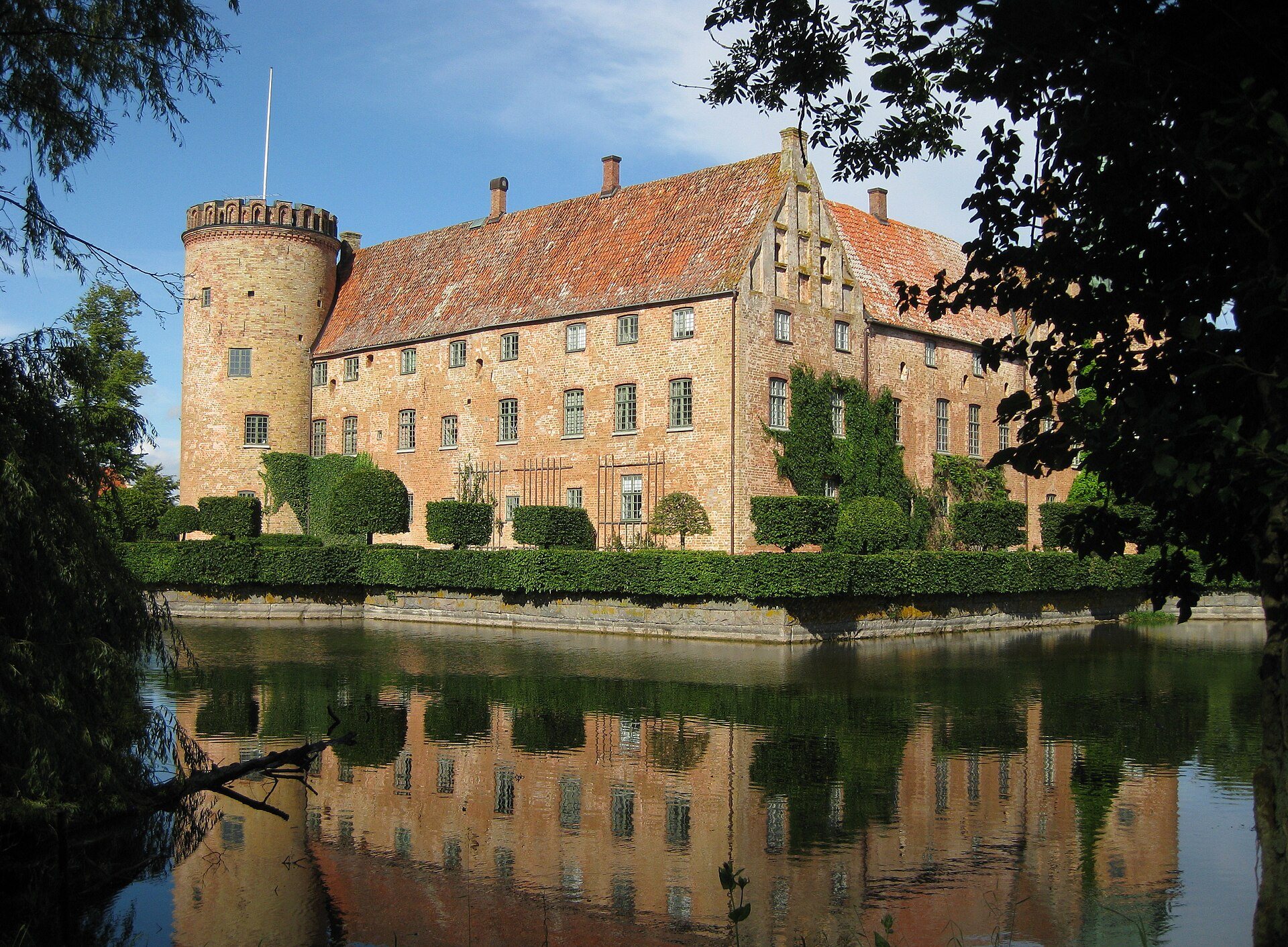
Vittskövle slott reflected in its moat, with a round tower and stepped gablesJorchr · CC BY-SA 3.0 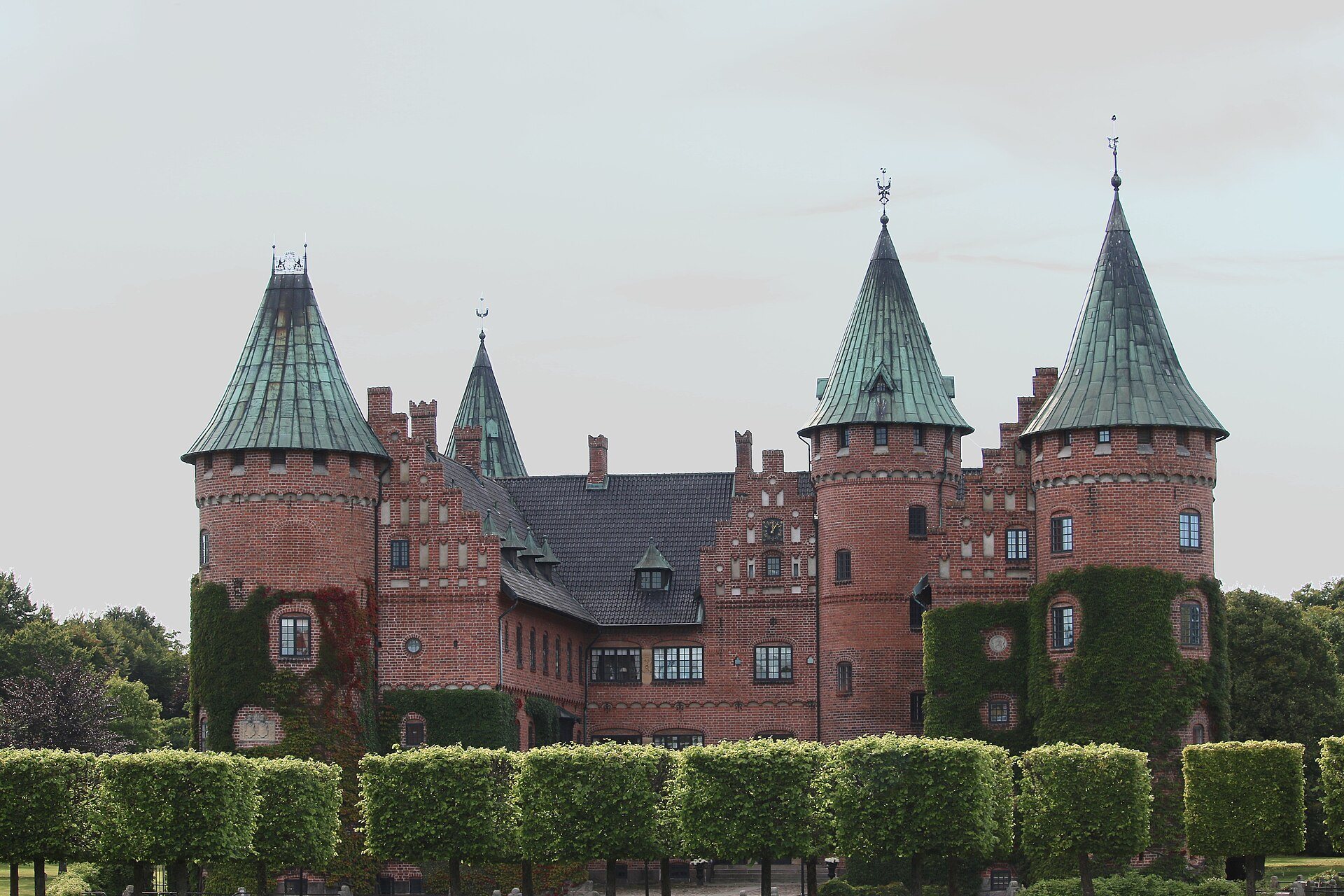
Trolleholm's red-brick towers with pointed copper spires near SvalövJorchr · CC BY-SA 3.0 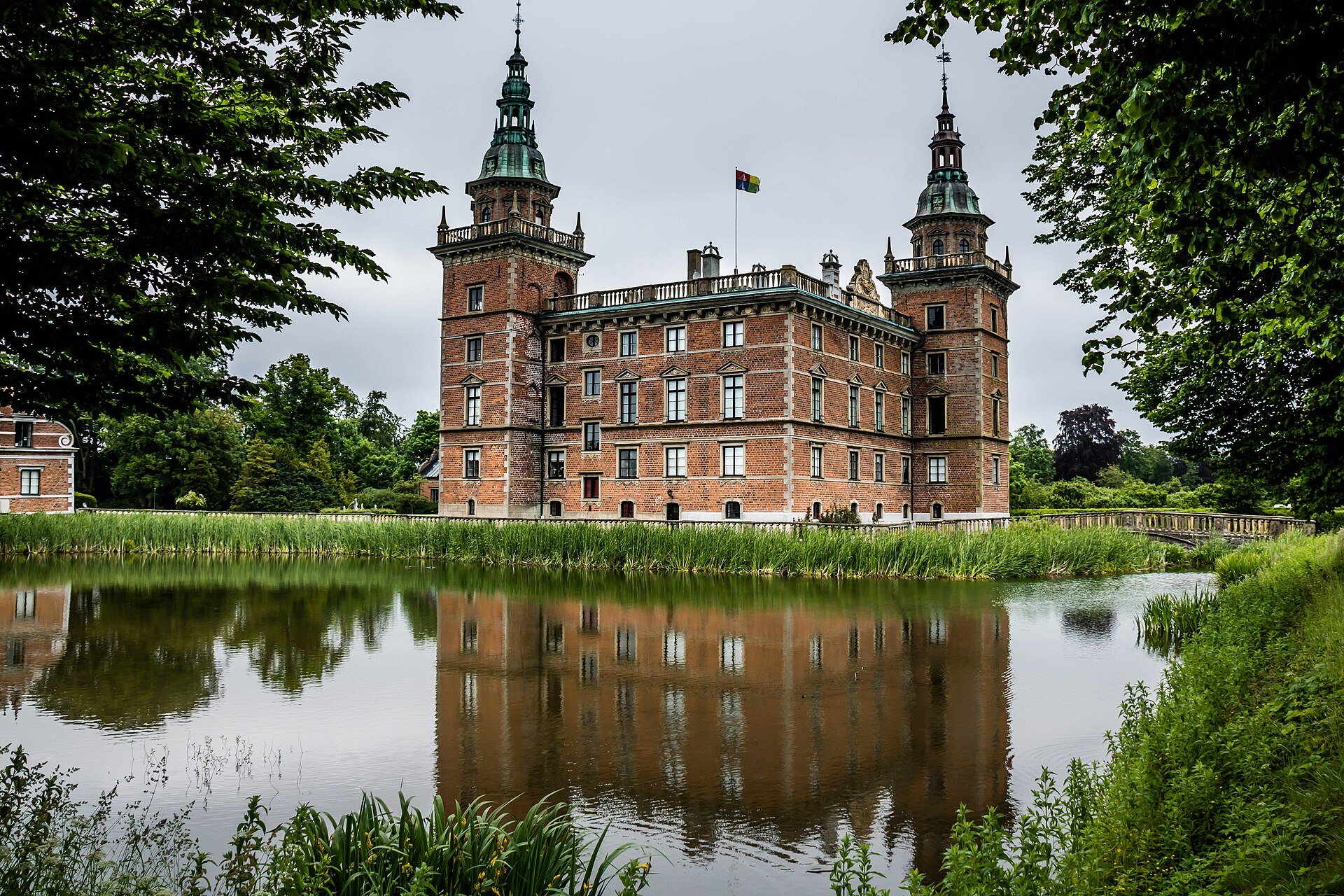
Marsvinsholm slott and its towers reflected in the moat near YstadSusanne Nilsson · CC BY-SA 2.0 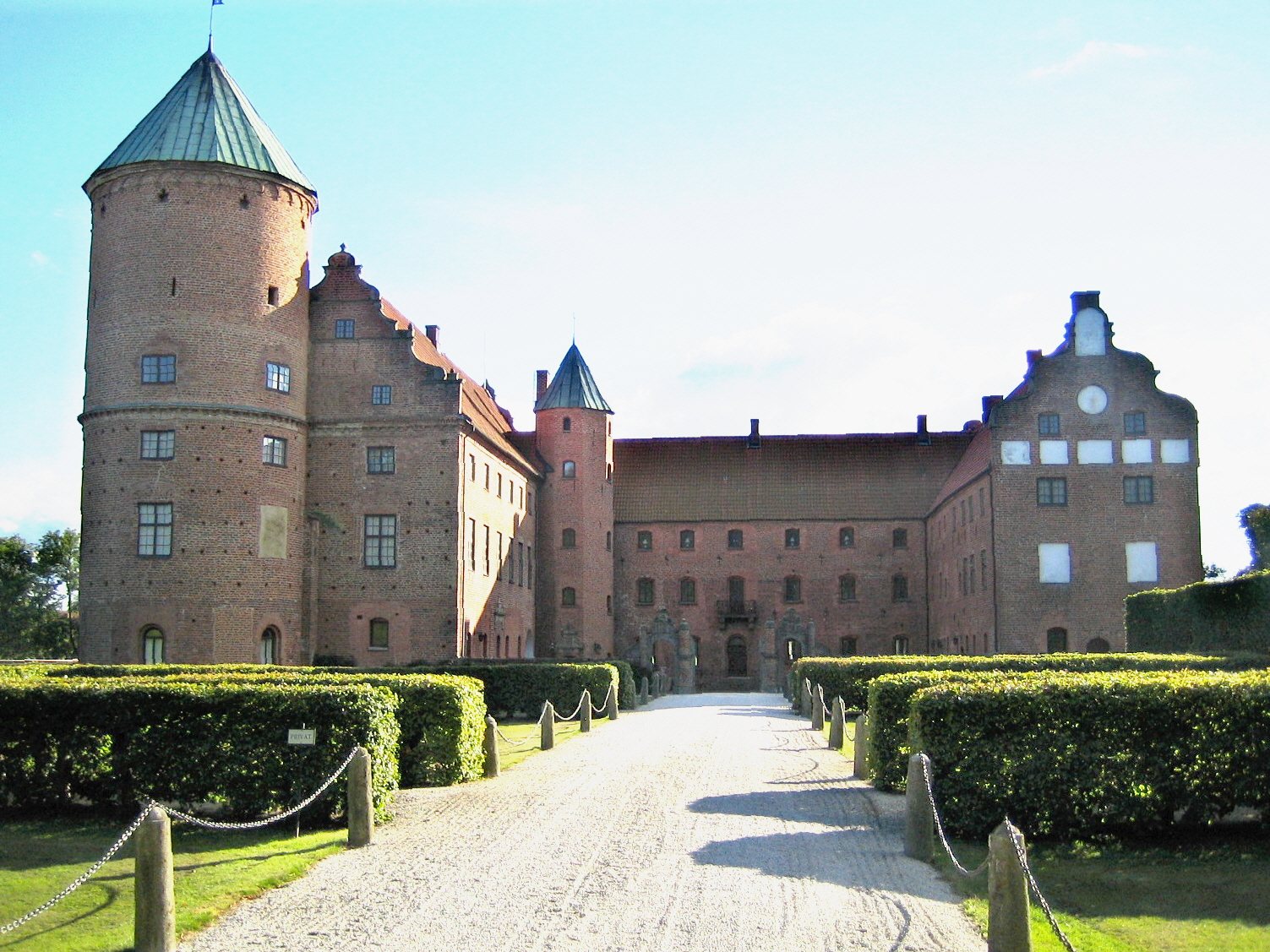
Skarhults slott with its round tower and stepped gables near EslövJorchr · CC BY-SA 3.0 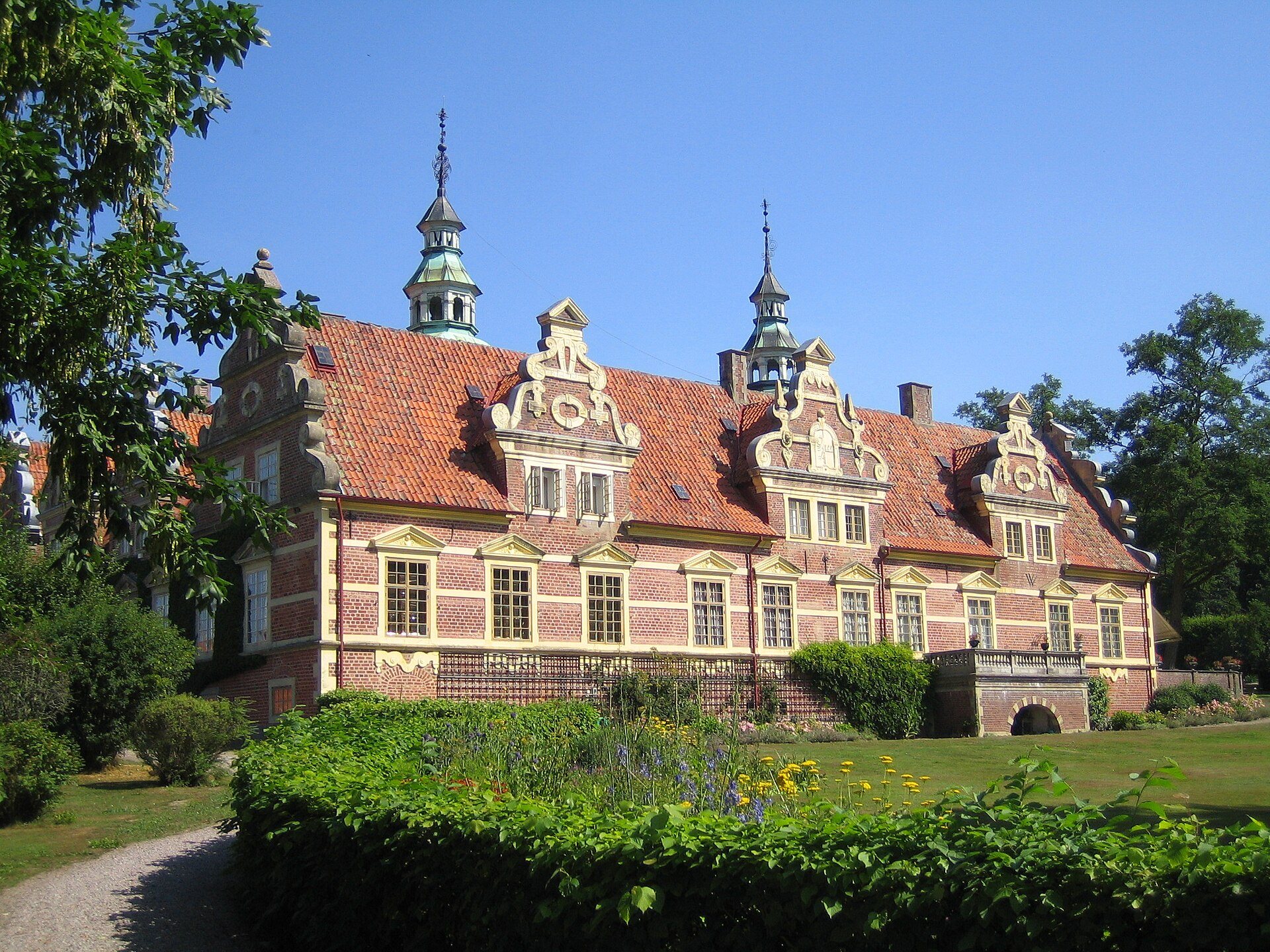
Vrams Gunnarstorp's Renaissance gables and copper-topped towers above a clipped hedgeJorchr · CC BY-SA 3.0 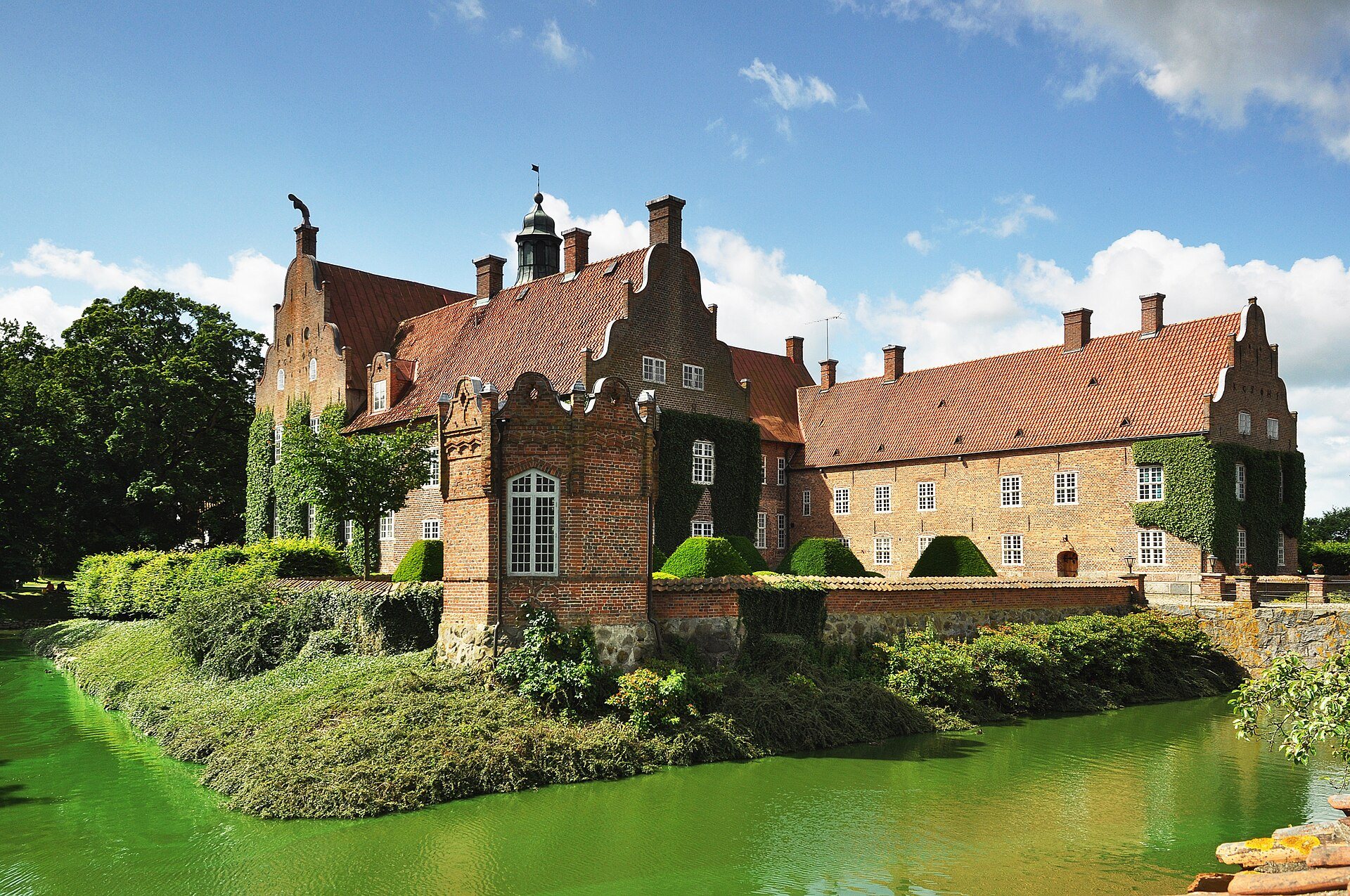
Trolle-Ljungby slott framed by water and greenery in KristianstadHelen Simonsson · CC BY-SA 4.0 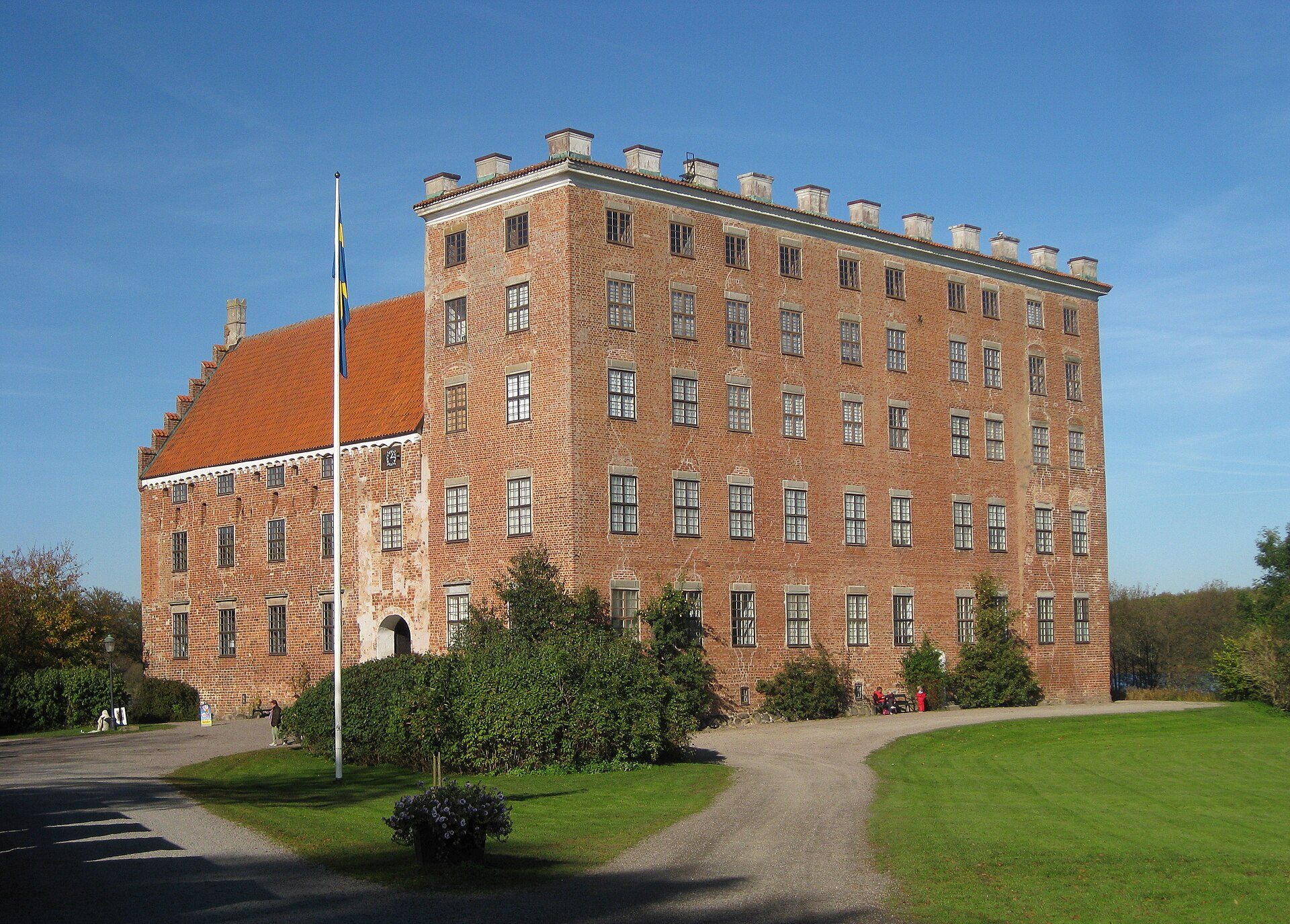
The tall brick walls of Svaneholms slott by the lake in SkurupJorchr · CC BY-SA 3.0 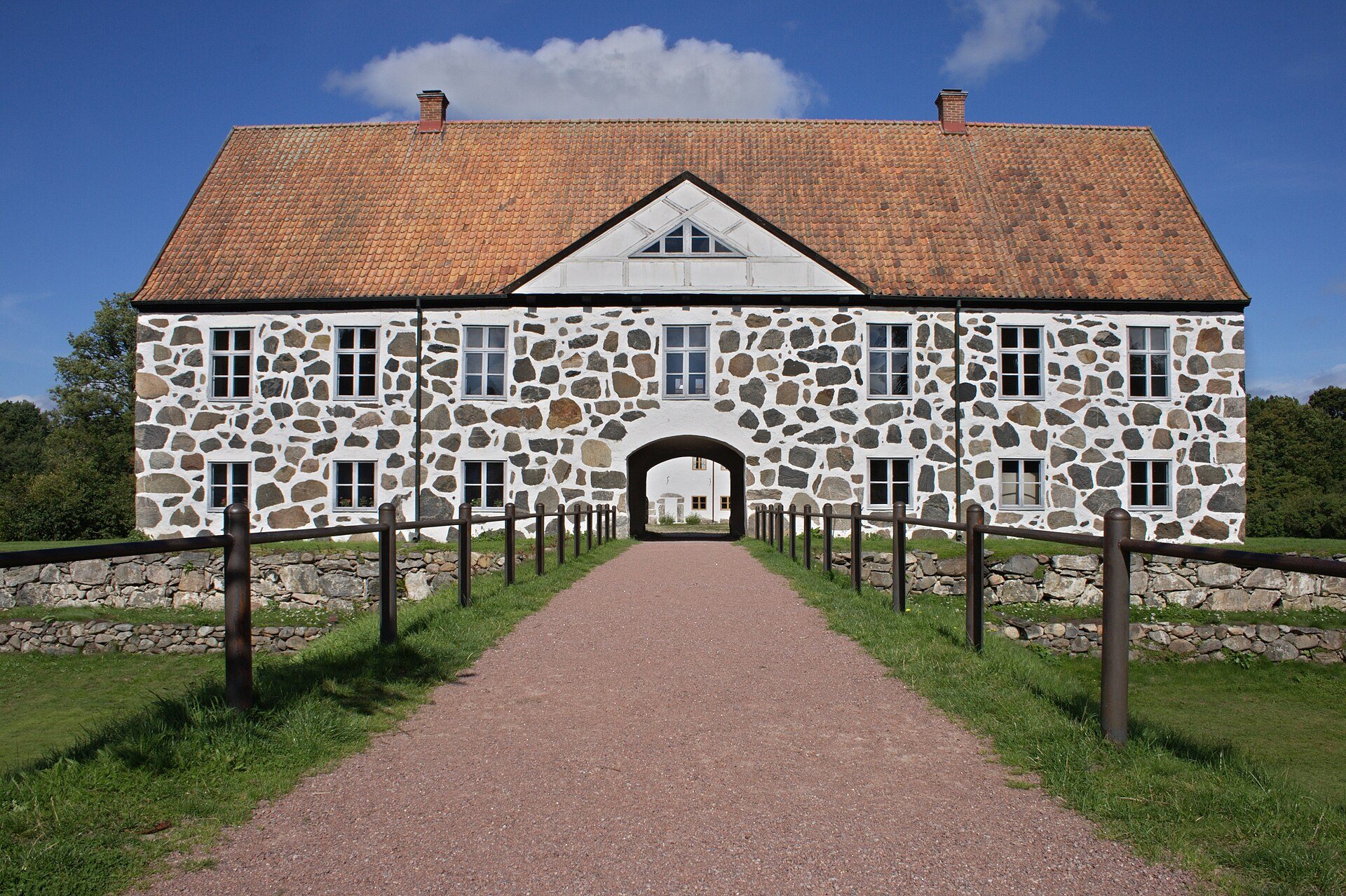
The fieldstone gatehouse of Hovdala slott, south of HässleholmF.A.E. · CC BY-SA 3.0
Our pick 1: Glimmingehus — the real medieval thing
If you only see one castle in Skåne, make it this one. The foundation stone was laid on 2 May 1499 for the Danish knight Jens Holgersen Ulfstand, and the building is a fortified stone house: defence, living quarters, a hall for show and the kitchens, all under one roof. It still has its firing slits, portcullises and murder holes — and, more surprisingly, warm-air heating and toilets. The German sculptor Adam van Düren carved its decoration, including the Wild Man figure.
Inside you walk the medieval rooms, see the well in the cellar and the remains of the ovens and kitchen, and read the entrance inscription with the founding year. Outside there is the moat, a park, later buildings and a reconstructed builders' workshop. Riksantikvarieämbetet (the Swedish National Heritage Board) runs the visits.
Why we pick it: nothing else in Skåne makes the 1400s feel this close. Children love the narrow stairs and thick walls. Glimmingehus is at Borgvägen 6, Hammenhög, on Österlen. Its website explains the bus options; there is a pre-booked Skånetrafiken service, so check that before you go.
- Skåne & Danmark
Our pick 2: Sofiero — a royal garden by the sound
Sofiero is not a fortress at all but a summer palace, and that is its charm. Oscar and Sophia of Nassau — later King Oscar II and Queen Sophia — bought the farm Skabelycke north of Helsingborg in 1864, and their summer residence was ready in 1866. It started as a smaller single-storey house and was later enlarged into the palace you see today.
In 1905 they gave Sofiero to their grandson Gustaf Adolf and his bride Margareta as a wedding present. The couple created rock gardens, flower beds and a kitchen garden and built a greenhouse; Margareta's English gardening background shaped the landscape. Gustaf Adolf, later King Gustaf VI Adolf, planted more than 5,000 rhododendrons, mostly in the ravines north and south of the palace. He spent his summers here until his death in 1973 and left Sofiero to the city of Helsingborg.
Today the palace floor holds the exhibition "Sagan om Sofiero" about the royals, the staff and how a royal park became everyone's garden, and the park has changing exhibitions. Why we pick it: come in rhododendron season and it is one of the most beautiful places in Sweden. Address: Sofierovägen 131, Helsingborg; city bus 8 stops at the main entrance (Laröd Sofiero huvudentré).
Our pick 3: Malmöhus — a Renaissance castle in the city
Malmöhus is the easiest castle to reach from Lomma and Bjärred, and it is far more than a museum building. Erik of Pomerania founded a castle here in 1434, and remains of it survive inside the later complex. The castle you see was rebuilt in 1537–1542 on the orders of the Danish king Christian III, after destruction in the Count's Feud. Statens fastighetsverk describes it as Dutch architectural ideals combined with Italian fortification techniques, and Malmö calls it the Nordic region's oldest surviving Renaissance castle.
Danish kings stayed here when they visited Malmö, and after Skåne became Swedish in 1658 the fortifications were strengthened. Later it became a prison, then a museum, opened in 1937. In 1945 it gave temporary shelter to survivors of the concentration camps.
Today Malmö museum runs the visits: the royal apartments and castle history, plus an aquarium and natural-history exhibitions in the wider museum complex. Walk the courtyard, the moat and the ramparts too. Why we pick it: a real Renaissance fortress, rainy-day proof, and on the way to everything else in Malmö. Address: Malmöhusvägen 6; the museum says it is about 1.3 km from Malmö Central Station.
 Skåne & Danmark
Castles you can go inside
These castles open their rooms to visitors as a museum, an exhibition or on guided tours. What is open varies with the season, so check each website before you go.
Hammenhög, Simrishamn
Medieval stronghold begun in 1499; walk the original rooms, moat and park.
Bengt A. Lundberg · CC BY 2.5
Malmö
Renaissance castle rebuilt in 1537–1542; royal apartments, history and an aquarium in the museum.
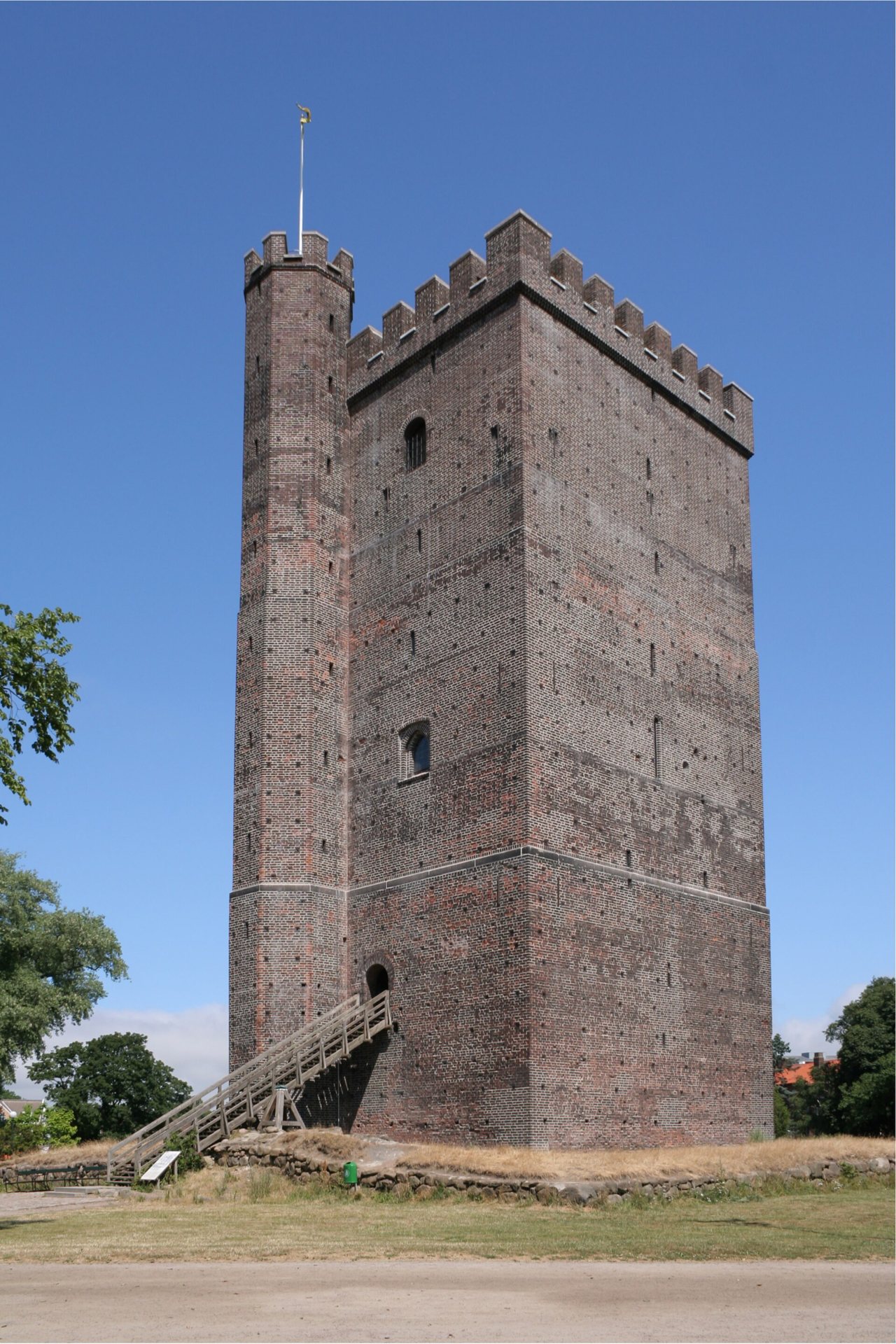
Helsingborg
The surviving keep of Helsingborg Castle, from around 1320, with an exhibition and a rooftop view.
Ikiwaner · CC BY-SA 3.0
Bara, Svedala
Renaissance castle founded in 1537, owned by the city of Malmö; organised tours, a public park and beech woods.
Johan Jönsson (Julle) · CC BY-SA 4.0
Skurup
Castle begun around 1530, linked to the farm reformer Rutger Macklean; museum, restaurant and lakeside walks.
Jorchr · CC BY-SA 3.0
Hässleholm
Gate tower from 1600 still marked by 1600s fighting; museum, park and kitchen garden.
F.A.E. · CC BY-SA 3.0
Andrarum, Tomelilla
Christina Piper's yellow Baroque palace, completed in 1741; guided visits and cultural events.
Höör
A nunnery documented in 1181, now a private castle estate; vaults, exhibitions and gardens are open, the home is not.
Tomelilla
Historic castle that is part of an agricultural school; castle visits and tours when the school allows.
Castles with a park, art or a café
Here the castle itself is usually closed — often it is someone's home — but you are welcome in the park, a gallery or a café on the estate. Keep to the paths and areas the estate opens to the public.
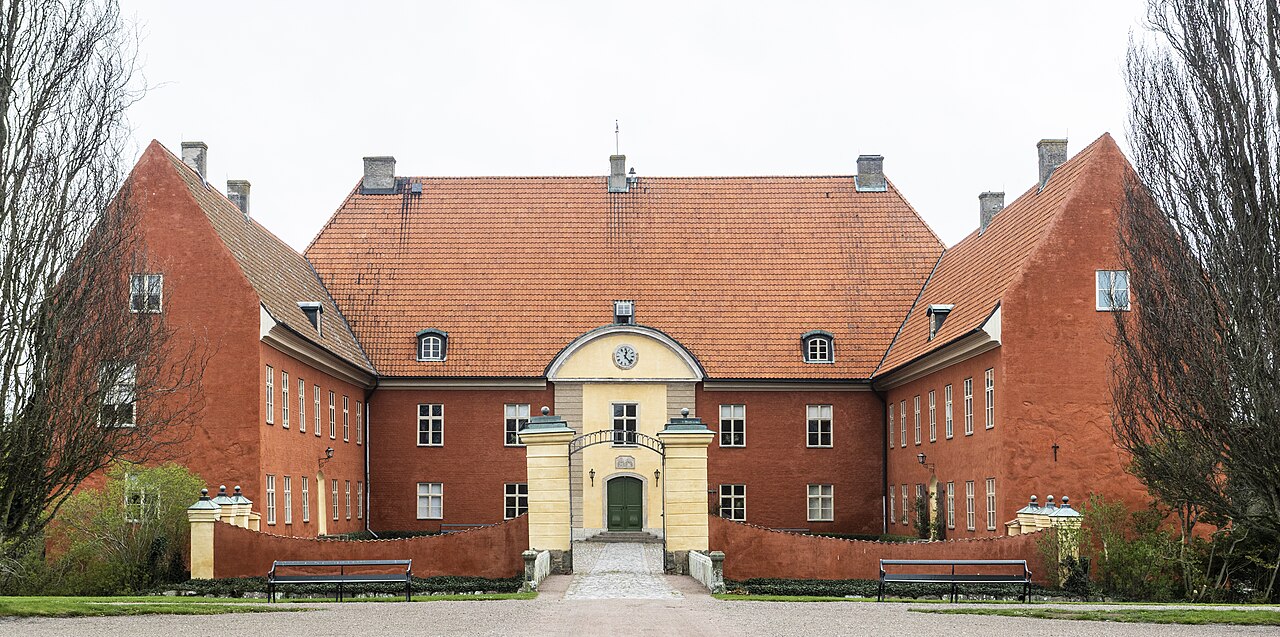
Mölle, Höganäs
Main building from the mid-1500s on medieval remains; public park, museum, art gallery, concerts and café.
David Castor · CC0
Knislinge, Östra Göinge
Contemporary art on a historic castle estate since 1987; sculpture park, galleries and café.
Sjöbo
1700s Rococo ensemble after designs by Carl Hårleman, owned by the Ramel family; garden, café and estate walks.
Vittskövle slott
Kristianstad
Renaissance castle built by Jens Brahe in 1553; a private home, but the park may be visited.
Jorchr · CC BY-SA 3.0
north of Helsingborg
Castle built 1865–1872; private, but parts of the park and the surrounding reserve are open.
Tollarp, Kristianstad
Built 1635–1638 and reached by the raised road Höge väg; private home with a public park.
Ovesholm
Vä, Kristianstad
Castle from 1792–1804; a private home whose English landscape park welcomes visitors.
Alnarp, Lomma
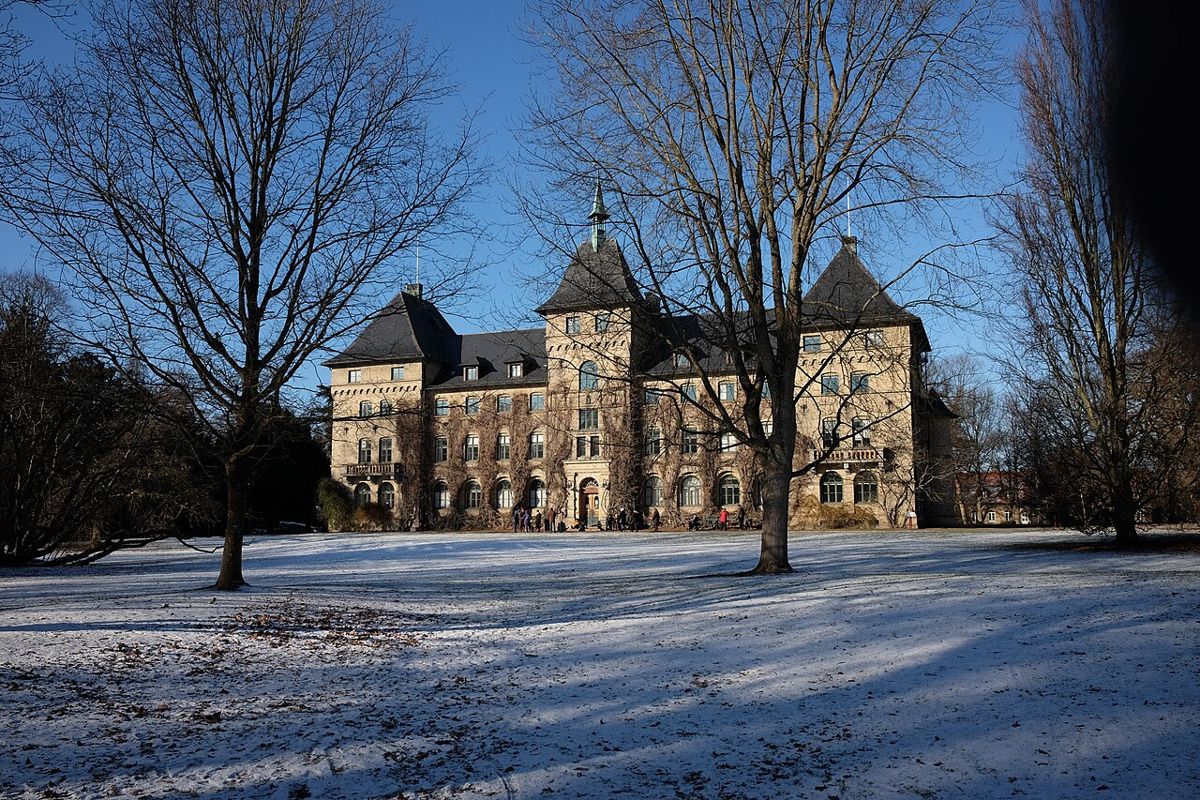
Completed in 1862 for the agricultural institute; the castle is a university building, the park is open to all.
Landskrona
Christian III's castle from 1549–1559; fortress grounds, guided walks and events.
Tomelilla
Family-run castle estate and filming location for Kockarnas kamp; pre-booked group visits and tastings.
Castles where you eat or stay
At these castles you get inside as a guest — at the restaurant, the hotel or an event — rather than on a museum visit. Borgeby is the one closest to us, just inland from Bjärred.
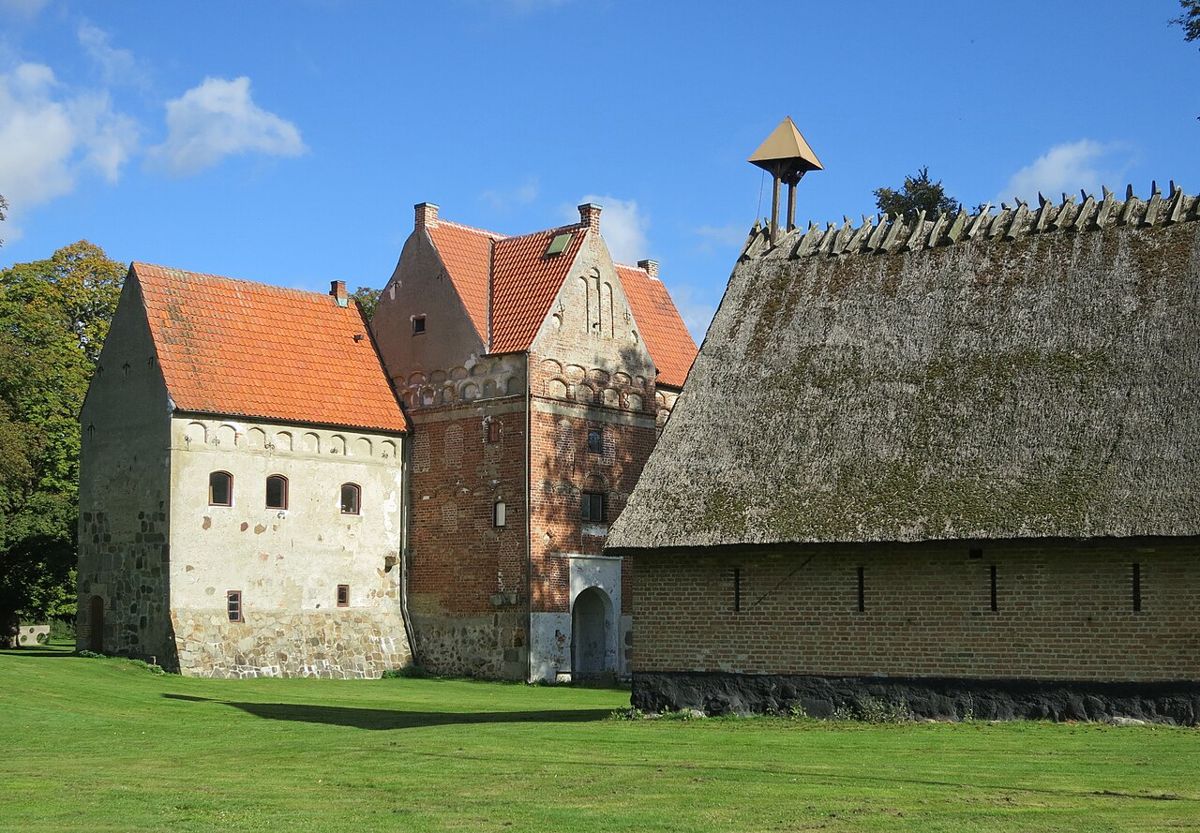
Borgeby, Lomma
Gate tower with fabric from the 1300s by the river Lödde å; restaurant, events, park walks and paddling.
Fjälkinge, Kristianstad
Began as a 1200s monastery and became King Karl XV's summer residence; hotel, restaurant, park and herb garden.
Häckeberga slott
Genarp, Lund
A castle on an island in the Häckeberga nature reserve, today run as a hotel and restaurant.
Francois Polito · CC BY-SA 3.0
Sjöbo
Rococo main building from 1766, attributed to Jean Eric Rehn; scheduled dining and events.
 Borgeby4
Private castles: admire them from the road
Some of Skåne's most famous castles are private homes with no public visits. Allemansrätten, the right of public access, does not let you into the garden or courtyard around someone's home, so a beautiful castle seen from the road is not an invitation to walk in. Enjoy these from public roads, or watch their websites for the occasional open event.
Trolleholm
Svalöv
Fairy-tale silhouette largely from Ferdinand Meldahl's 1800s remodelling; castle and park are private.
Jorchr · CC BY-SA 3.0
Trolle-Ljungby
Kristianstad
Private family estate; castle and garden are not open, though businesses in the estate wings may be.
Helen Simonsson · CC BY-SA 4.0
Vrams Gunnarstorp
Billesholm, Bjuv
Renaissance castle from the 1600s with historic plantings; ask the estate before visiting.
Jorchr · CC BY-SA 3.0
Knutstorp
Kågeröd, Svalöv
Birthplace of the astronomer Tycho Brahe in 1546, owned by the Wachtmeister family since 1771.
Marsvinsholm
Ystad
1600s castle remodelled in the 1800s, on a private farming estate.
Susanne Nilsson · CC BY-SA 2.0
Skarhult
Eslöv
A well-preserved Renaissance castle on a working estate; the farm shop beside it is the way to visit.
Jorchr · CC BY-SA 3.0
Also worth a look
- Borgeby4
 Alnarp3
- Skåne & Danmark
- Skåne & Danmark
- Skåne & Danmark